Wolfgang Amadeus Mozart’s connection with Freemasonry is documented in lodge history and in music written for Masonic occasions. He entered the Viennese lodge Zur Wohltätigkeit, usually translated as Beneficence, on 14 December 1784. During the remaining years of his life, he composed for fellowship, advancement, celebration, and remembrance. His music gives us an unusually direct way to encounter the emotional life of an eighteenth-century lodge.
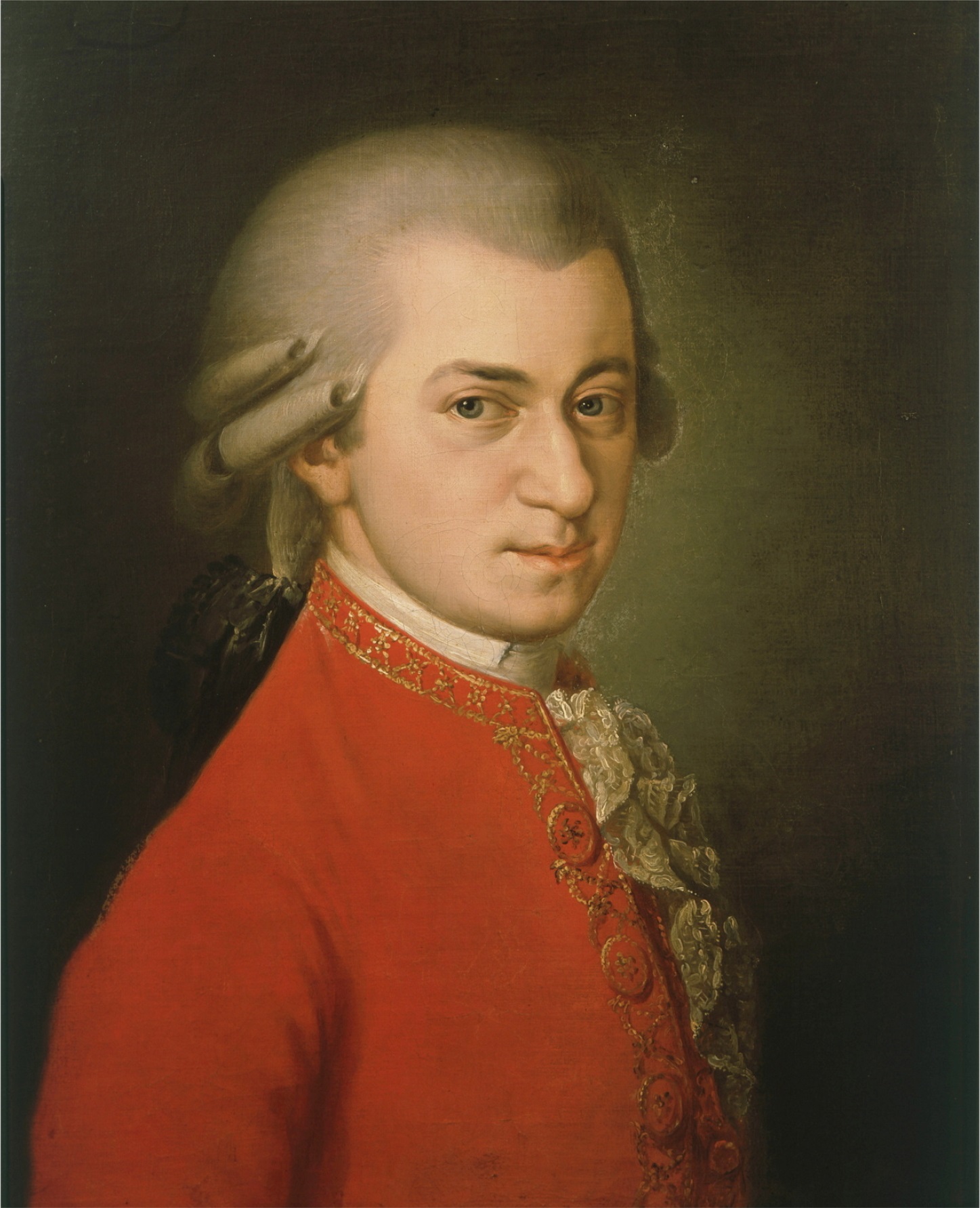
Mozart joined a city in which Freemasonry connected musicians, writers, officials, and people interested in the sciences. These circles offered opportunities to meet and exchange ideas, as well as practical support. The Berliner Philharmoniker’s historical account notes the presence of fellow Masons among the subscribers to his concerts.
His own lodge was not the whole of his Masonic world. The scholarly project Mozart & Material Culture records his attendance at Zur wahren Eintracht, or True Concord, associated with the scientist Ignaz von Born. After imperial restrictions reduced Vienna’s lodges, Mozart belonged to the reorganized Zur neugekrönten Hoffnung, or Newly Crowned Hope.
His participation soon extended beyond initiation. The King’s College London research project records his advancement to journeyman on 7 January 1785 and to master shortly afterwards. Mozart was an active member of the fraternity, and the music he continued to write for its gatherings belongs to that sustained involvement.
The evidence establishes membership and participation. His private reasons for joining remain less certain. A careful account leaves room for friendship, intellectual curiosity, and personal conviction without claiming access to motives that Mozart did not explain conclusively.
His Masonic commitments also coexisted with his Catholic faith. The Scottish Rite, Northern Masonic Jurisdiction’s account emphasizes both his lodge involvement and his continuing sacred music. His life resists a simple division between religious belief and Enlightenment fellowship: these were overlapping parts of his experience, even though the Catholic Church opposed Masonic membership.
The practical meaning of fraternity emerges especially clearly in Mozart’s correspondence with the merchant and fellow Mason Michael Puchberg. In a letter dated December 1789, preserved in the International Mozart Foundation’s scholarly edition, Mozart asked to borrow 400 florins to meet pressing expenses, including doctors’ and apothecaries’ bills. An annotation by Puchberg records that he sent 300 florins.
The same letter invited Puchberg and Joseph Haydn to a private opera rehearsal. Its mixture of financial anxiety, gratitude, and music brings the relationship into focus. Mozart appealed to someone he trusted, and the surviving record shows a material response. Here, brotherhood took the form of help given within a continuing friendship.
The New Mozart Edition, published through the International Mozart Foundation, identifies a substantial group of explicitly Masonic compositions. Among them are Die Gesellenreise, K. 468; Die Maurerfreude, K. 471; Masonic Funeral Music, K. 477; the lodge songs K. 483 and K. 484; and the Little Masonic Cantata, K. 623.
These works served different purposes. A song connected with advancement addresses a person taking another step. Celebratory music marks a shared occasion. Funeral music gives an assembly time to remember those who have died. This range matters: the lodge appears as a community moving through ordinary human experiences, with music helping to give those experiences form.
The Masonic Funeral Music, K. 477, belongs to the remembrance of Mozart’s fellow Masons Georg August of Mecklenburg-Strelitz and Franz Esterházy. Research presented by King’s College London examines the surviving catalogue and score, including difficulties in the chronology: the date in Mozart’s catalogue sits uneasily with the deaths and memorial events of November 1785.
That small problem is a useful lesson in historical method. A famous name does not make every date straightforward. Manuscripts, contemporary records, and later interpretations must be read together.
For a listener, the work also offers an occasion for reflection without requiring a single prescribed response. An assembly remembering its dead is doing something both intimate and communal. Music can sustain that attention where an explanation alone might end too quickly.
The cantata Laut verkünde unsre Freude, K. 623, was written for the dedication of new lodge premises in Vienna in November 1791. The New Mozart Edition dates the dedication to 17 November, correcting the date of 18 November given in older accounts. It stands among Mozart’s final completed works and reflects his continuing involvement in the fraternity during the last weeks of his life.
Lasst uns mit geschlungnen Händen (“Let us with joined hands”), K. 623a, is a Masonic chain song traditionally associated with Mozart. It appeared with some copies of the posthumous 1792 edition of his Little Masonic Cantata and later became associated with the melody of Austria’s national anthem.
About the attribution. Mozart’s authorship of K. 623a is disputed. The Mozarteum’s Köchel catalogue classifies it as a work of doubtful authenticity; the New Mozart Edition distinguishes it from the documented cantata K. 623. It is presented here with that historical qualification.
The Magic Flute, K. 620, invites discussion of Masonic ideas through its temple imagery, trials, and concern with wisdom and moral development. Mozart collaborated with Emanuel Schikaneder on a public theatrical work whose fairy-tale world and comedy also have their own importance.
It is most rewarding to approach the opera as art open to interpretation. Recognizing Masonic resonances can deepen a performance; it need not turn every character, number, or gesture into a fixed secret code. The listener can consider how the work imagines courage, trust, authority, and the movement toward understanding.
Mozart’s Masonic music suggests a way of thinking about fellowship that extends beyond a list of celebrated members. A community can make something together: a song, an attentive silence, an act of remembrance. Each asks people to listen as well as to contribute.
That is a useful reflection for Masonic work today. The inherited music does not prescribe every contemporary practice. It offers a historical encounter with the effort to join individual expression to a common purpose.
Continue with our illustrated guide to Masonic symbols, or explore how reflection and shared inquiry inform the Masonic method.