Masonic regalia are the garments and insignia worn for Masonic work: most recognizably the apron, together with gloves, collars, sashes, and jewels where a particular tradition prescribes them. They can indicate a degree, an office, or membership in a lodge or other Masonic body. They also connect an abstract language of symbols with objects made, worn, and cared for by real people.
No single design represents all Freemasonry. Materials, colors, emblems, and rules of use vary between rites and jurisdictions. An unfamiliar apron cannot reliably be identified by color alone; its place, period, and institutional setting matter.
The Masonic apron recalls the protective garment of the working craft. Its symbolic use keeps attention on work: the effort to improve one’s conduct, contribute to a lodge, and act responsibly toward others. White aprons have traditionally carried associations of innocence and honorable intention.
Over time, aprons became a distinctive field for embroidery, painted imagery, ribbons, and other decoration. A change in appearance may relate to degree or local practice, but the relationship is not identical everywhere. A plain apron and an elaborately worked one can both belong to serious Masonic traditions.
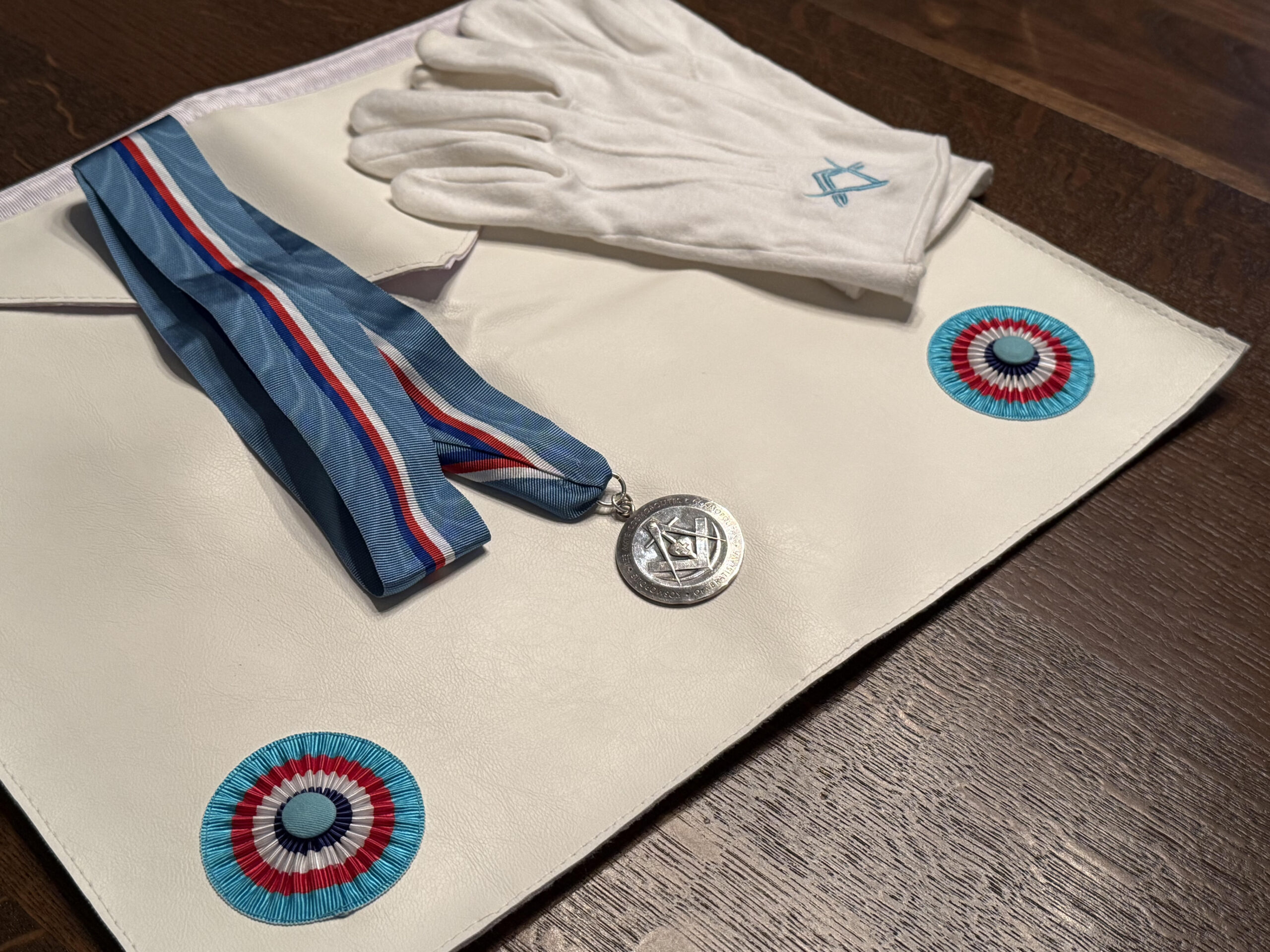
The photograph shows a Fellowcraft apron and lodge jewel associated with Kosmopolis Lodge in Bratislava. It is a specific contemporary example, not a specification for DELPHI-USA regalia. Its named provenance is essential: an object becomes more intelligible when its community is identified.
White gloves appear in a number of Masonic traditions. Museum explanations connect them with honesty, purity of intention, and the ethical quality of the work undertaken. Their meaning is therefore more demanding than an expectation of formal dress.
The image of clean hands poses an uncomfortable but useful question: how do our decisions affect others? A symbol of honorable intention is an invitation to examine motives, acknowledge mistakes, and make amends where necessary. The outward garment gives that inward responsibility a visible reminder.
Collars and sashes provide a setting for insignia. A jewel may identify an office or express a connection with a lodge, degree, or Masonic body. The term “jewel” describes an insignia; it does not necessarily mean a precious gemstone.
Before interpreting one, ask what function it serves. An officer’s emblem, a lodge membership jewel, and a commemorative object answer different questions. An image without provenance can easily conceal those differences. Even a familiar motif should be read in relation to the institution that authorized its use.
Our article on Masonic lodge officers introduces the responsibilities behind offices. Regalia can make a role recognizable during a meeting; the role itself is fulfilled through preparation, service, and accountable conduct.
The range of Masonic regalia extends beyond the three Craft degrees. Historical collections include objects associated with other degrees and bodies, each requiring its own context. Similarity of appearance does not establish that two objects had the same ceremonial use.
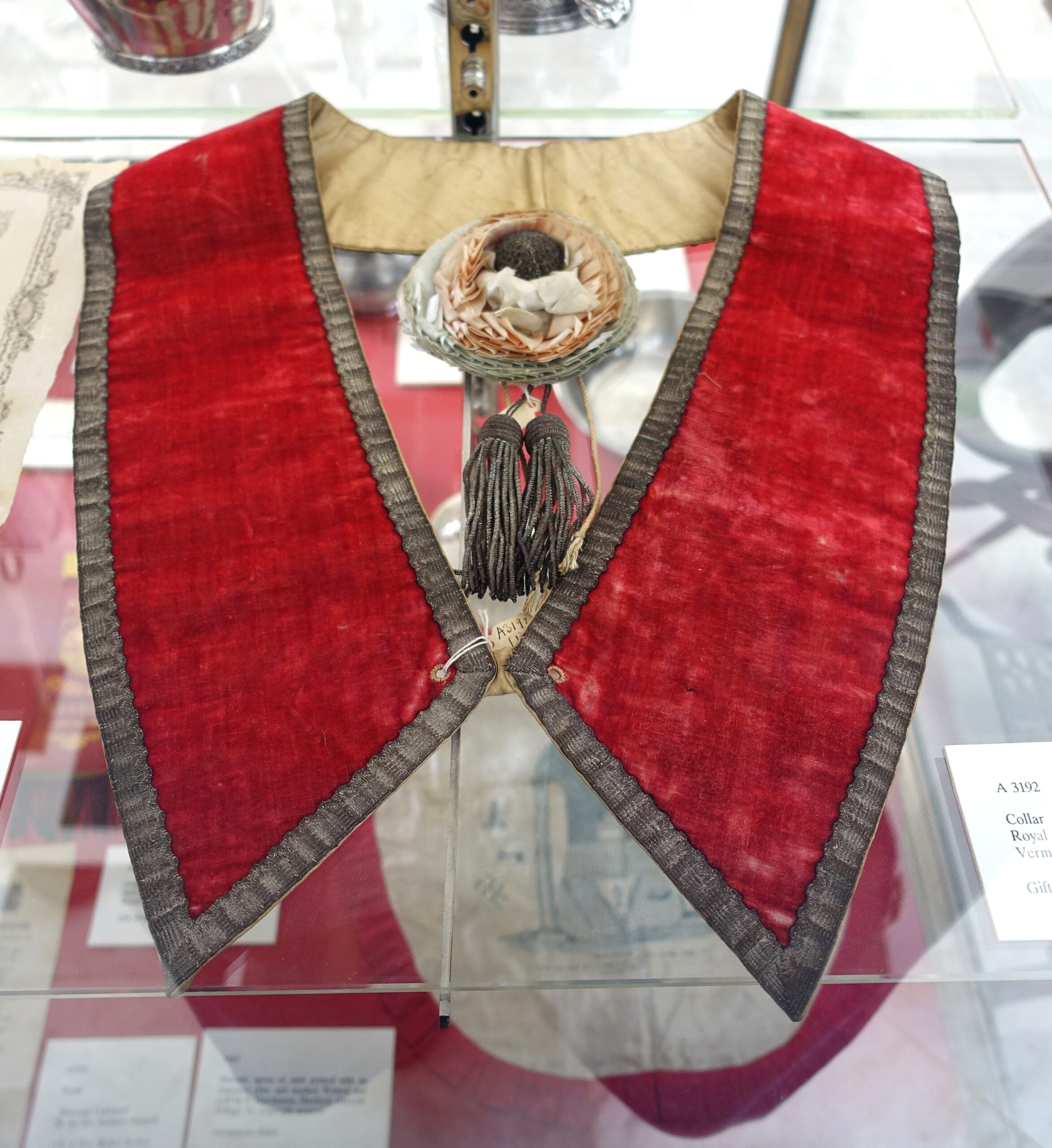
This collar and rosette belonged to Jesse Read of Ludlow, Vermont, and are identified as Royal Arch regalia dating to about 1815–1825. They are preserved at the Bennington Museum. The example belongs to that historical setting; it should not be treated as an ordinary Craft officer’s collar or as DELPHI-USA dress.
Placing it alongside the Bratislava apron demonstrates why precise captions matter. These objects come from different places, periods, and Masonic contexts. Their differences form part of the history rather than a problem to be explained away.
Regalia also preserve the work of embroiderers, designers, and textile makers. A pattern book from around 1830 in the Musée de la franc-maçonnerie records designs for aprons, cordons, and collars, with notes about symbols and colors. Such evidence shows that these objects were planned and made within skilled trades.
Looking closely at construction can open another kind of inquiry. What materials were available? Which details were stitched, painted, printed, or applied? What has wear or repair changed? Questions of this kind give the maker and wearer a place beside the symbolic interpretation.
A museum object is not simply a code to decipher. It is also a surviving record of labor, taste, use, and preservation.
When studying an apron or jewel, begin with its documented identity. Useful details include the maker, owner, lodge or body, date, inscriptions, and collection record. If these are unknown, leave room for uncertainty rather than assigning a confident explanation from appearance alone.
For someone preparing to join a lodge, the practical approach is straightforward: ask the lodge what is required before purchasing anything. A museum photograph or a commercial listing cannot replace the guidance of the community in which the item will be worn.
The dignity of regalia depends on the conduct of the person wearing it. Decoration cannot supply integrity, and an insignia cannot perform an officer’s duties. The most useful reading brings attention back to the work and to the people sharing it.
In mixed Freemasonry, men and women participate in that work as equals. Regalia can express a common commitment while preserving the particular forms of a lodge and its tradition. Read alongside our guide to Masonic symbols, these objects offer another way to consider how reflection, craftsmanship, and fellowship meet.
For further background, explore our methodology and the three degrees of Freemasonry.