The first lodge in Utah Territory met at an army post in Cedar Valley. Its members were soldiers stationed far from home, and its charter came from Missouri. A little more than a decade later, three Salt Lake City lodges established a Grand Lodge of their own. In Provo, four Masons gathered in a merchant’s store that same week and began looking for a room in which to meet.
Utah’s Masonic history grew from these small beginnings into a network of lodges, civic ceremonies, and substantial buildings. It also developed amid a long dispute with the state’s largest religious community. Joseph Smith and several early Latter-day Saint leaders had been Masons in Illinois; later, Utah lodges excluded members of their church. Both histories belong in the account of how the fraternity took shape here.
Camp Floyd: a lodge at the army post
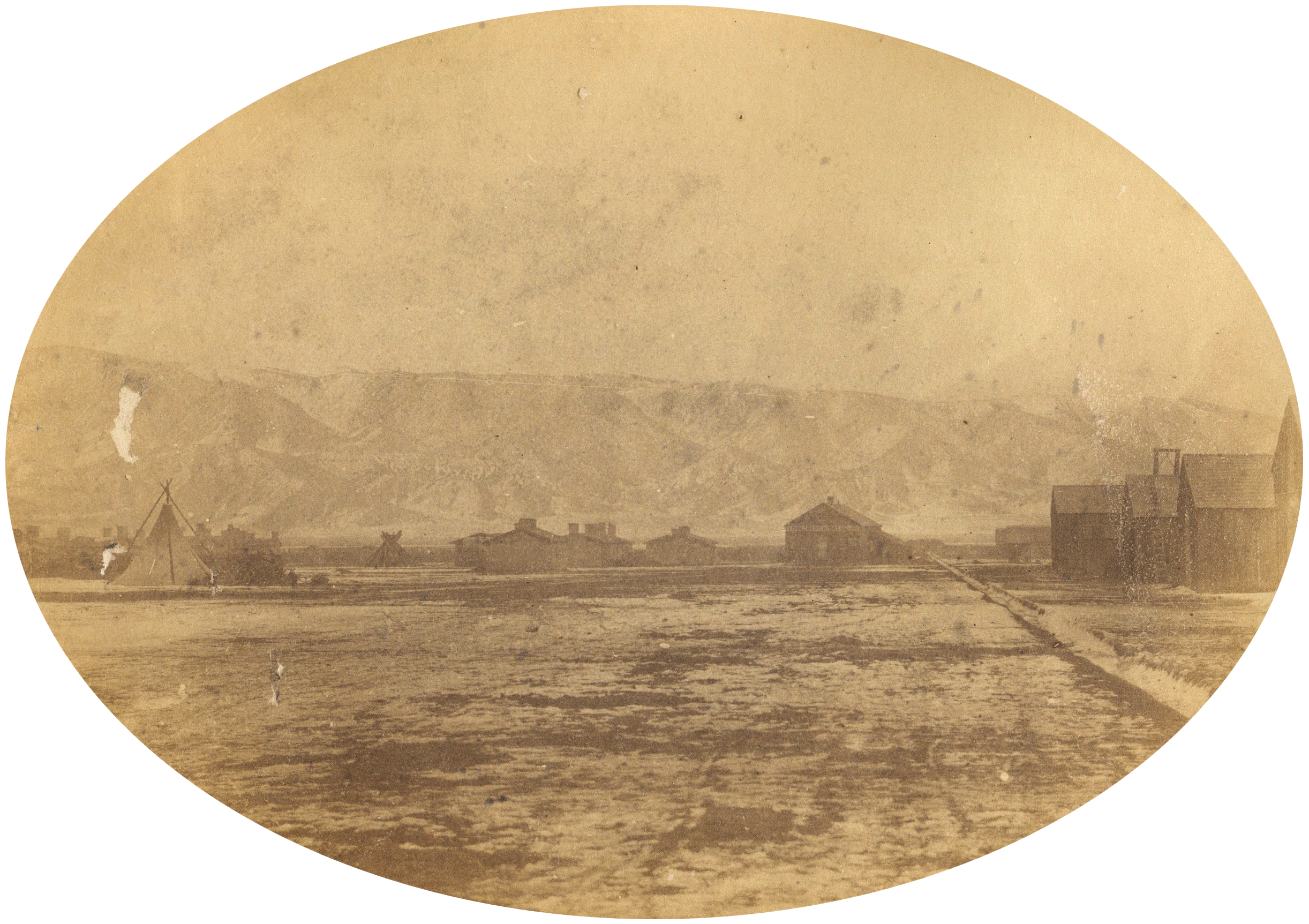
Camp Floyd was a consequence of the Utah War. In 1857, President James Buchanan ordered an army expedition to the territory amid reports of resistance to federal authority. After a difficult winter near Fort Bridger and negotiations that avoided a larger war, troops entered Cedar Valley in 1858. Soldiers and local labourers built a post near present-day Fairfield.
The garrison became a substantial settlement. Its men drilled, planted gardens, improved roads, and organized entertainments. A theatre, a circus, a temperance society, and a Masonic lodge supplied activities beyond military duty. Camp Floyd’s social life developed partly because the soldiers were isolated from the communities around them.
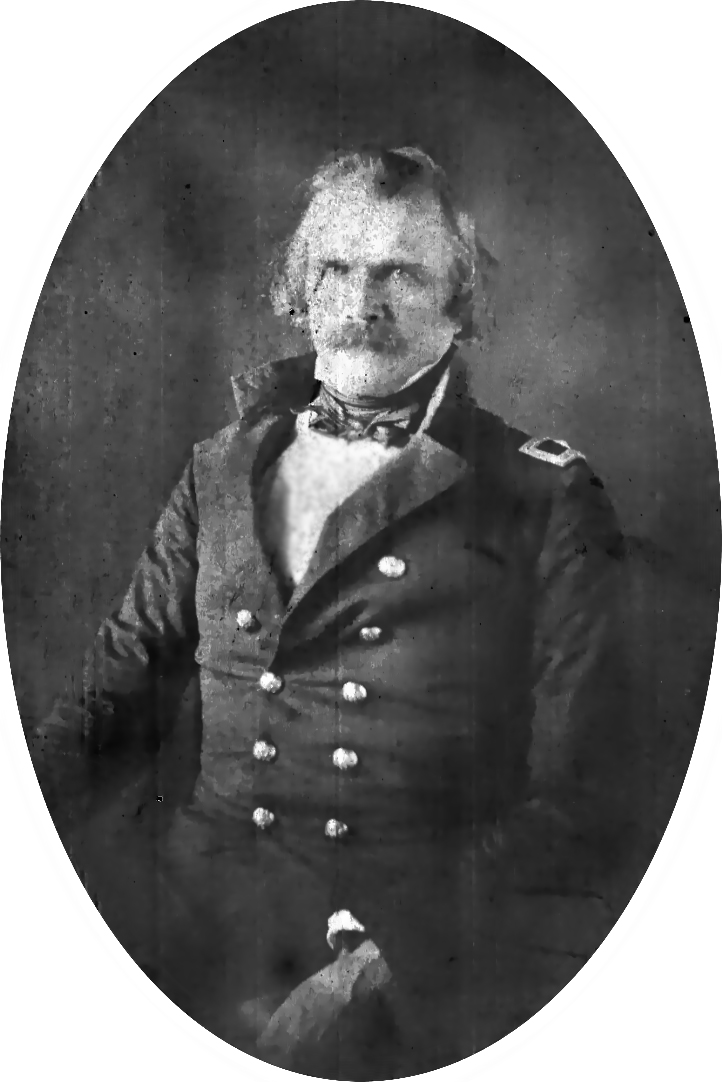
Twenty-three Master Masons petitioned the Grand Lodge of Missouri for permission to work. A dispensation was issued on 6 March 1859, followed by a charter for Rocky Mountain Lodge No. 205 on 1 June 1860. Local histories often date the beginnings to 1858; the later dates mark its formal authorization and charter.
The Civil War ended the experiment. The post, renamed Fort Crittenden, was abandoned in 1861 as troops were called east. The lodge’s charter, records, and jewels were returned to Missouri. Buildings and supplies were sold or dismantled, and materials found their way into surrounding farms. The lodge had depended on a military population that could disappear with a new set of orders. 1, 9
A short-lived lodge in a transient community
The military setting shaped the lodge’s prospects from the beginning. Men arrived with regiments, carried affiliations from other states, and could be ordered away before a local institution had time to settle. A Missouri charter supplied authority that the isolated post could not obtain from a Utah grand lodge, because none yet existed. When the army departed, the lodge’s records and jewels followed its charter back to the issuing jurisdiction.
The physical meeting place required substantial work. Attilio Parisi’s account describes a hall sixty feet long and thirty feet wide, built by the members themselves, with high windows for ventilation. It also records assistance to destitute migrants passing through the territory. In a post remembered for military confrontation, the lodge thus served some of the ordinary needs of a mobile population: fellowship, a place to meet, and aid in distress.14
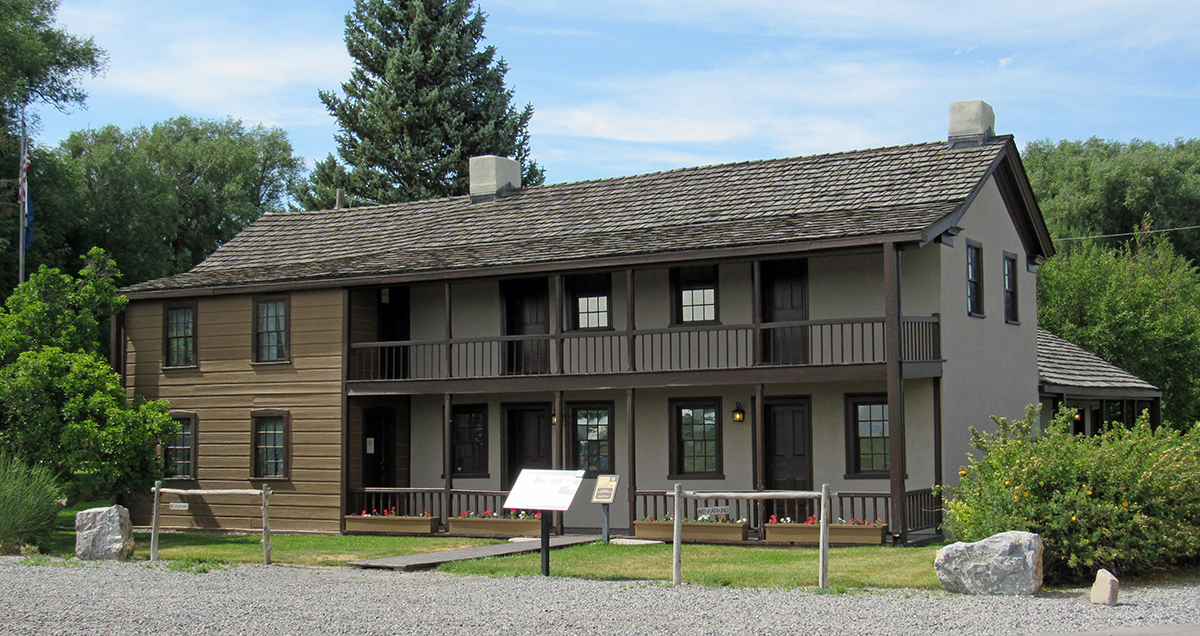
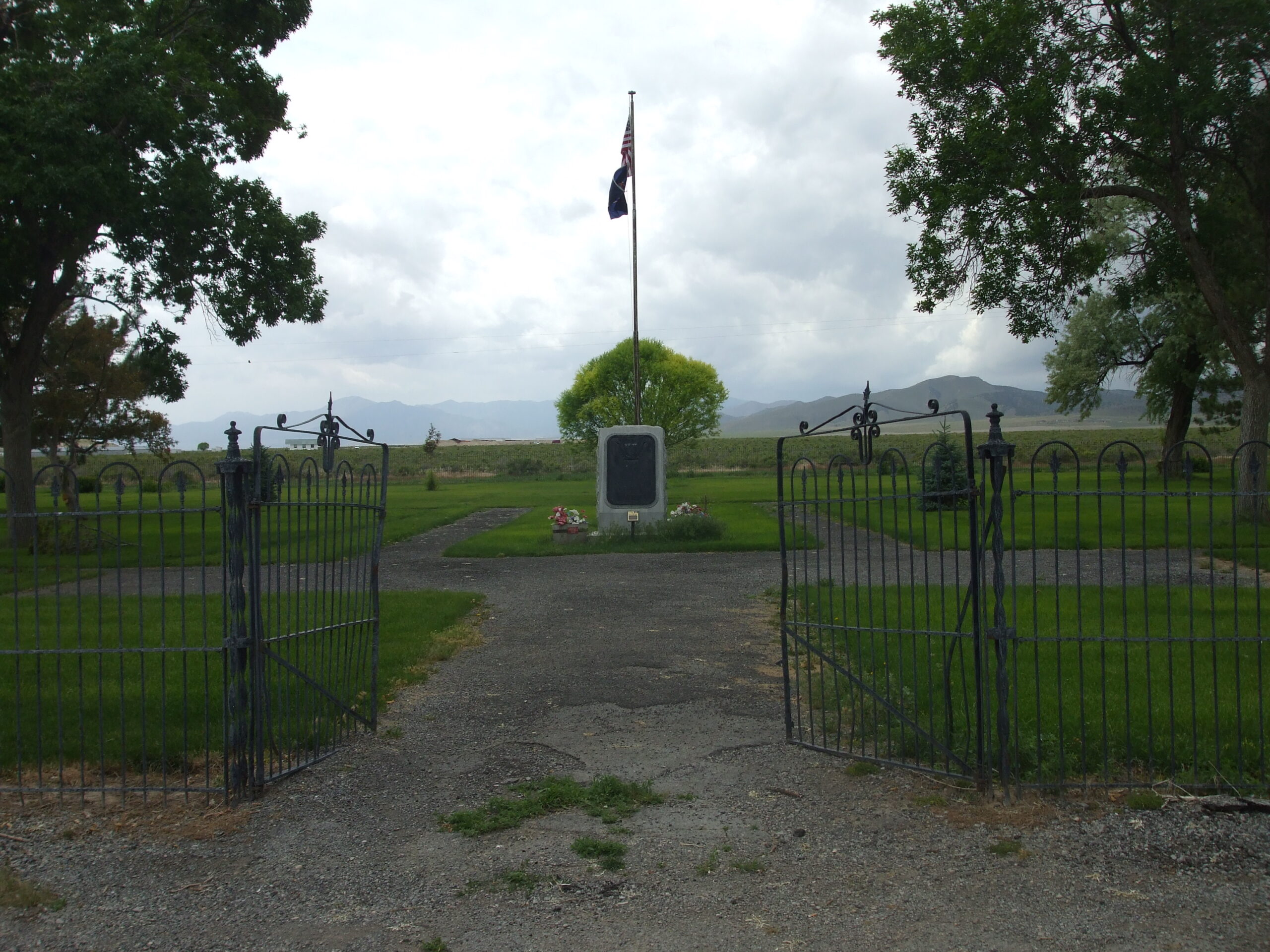
Camp Floyd’s disappearance explains why Utah’s later lodges were new foundations. The Grand Lodge established in 1872 could look back to the army lodge as a predecessor, but it did not inherit an uninterrupted local organization from it. The Civil War broke that first institutional thread. The buildings and cemetery preserved at Fairfield now help locate an episode that lasted only a few years.
Salt Lake City builds a lodge network
The next institutions took root in the capital. Masons arriving from other states and territories brought lodge memberships with them, but they needed outside jurisdictions to authorize new work in Utah. The resulting charters traced a map of connections across the West.
Mount Moriah’s early organization involved Nevada before it secured a Kansas charter in 1868. Wasatch obtained its charter from Montana in 1867. Argenta followed under Colorado in 1871. Each lodge had its own officers, members, and administrative history. Together, they provided the foundation for a territorial Grand Lodge.
On 16 January 1872, their Masters and Wardens assembled in Salt Lake City. The convention spent four days establishing the new body: adopting a constitution, arranging rules for subordinate lodges and disciplinary proceedings, selecting a seal, and providing for its finances. Wasatch, Mount Moriah, and Argenta became the founding lodges of the Grand Lodge of Utah.
Its formation gave these lodges a local authority to which new Utah applicants could turn. The institution could issue charters, settle jurisdictional questions, and hold its annual communications without depending on separate grand lodges in neighbouring states and territories. 1, 2
Four men in Benham’s store
On the evening of 20 January 1872, after the Grand Lodge convention had concluded, four Masons met in Charles S. Benham’s store on West Center Street in Provo. Benham and Benjamin Bachman were merchants. Ira M. Swartz was a district court clerk, and Samuel Paul was a deputy United States marshal.
They divided the work. Swartz prepared a petition; the others found a meeting place in Cluff’s Hall, a two-storey adobe building. Nine men signed the petition. The first regular meeting of Utah Lodge under dispensation took place on 24 February 1872.
In September, members chose the name Story Lodge in memory of William Rufus Story, a Civil War veteran and deputy marshal killed at Grantsville in 1870. Its charter was approved in October. Officers were installed on 21 October 1872 in the upper floor of Judge O. F. Strickland’s Octagon House. Story Lodge No. 4 became the first lodge newly chartered by the Grand Lodge of Utah. 2
A physician among the founders
Frederic Horatio Simmons, one of the original petitioners, illustrates the movement of Masons through the developing West. Before settling in Utah, he had lived in Oregon, Idaho, and Montana. He took part in founding Idaho’s first Masonic lodge at Lewiston in 1862, then moved again as the region’s population and opportunities changed.
He arrived in Salt Lake City in 1870 and relocated to Provo in 1872. His earlier lodge experience became part of the new association’s resources. People such as Simmons brought more than a certificate of membership: they knew how to organize meetings, correspond with other lodges, and sustain an institution through uncertain local conditions. Utah’s lodge network developed through these personal migrations as well as through formal charters. 10
Railroad towns, mining camps, and northern Utah
The Grand Lodge’s first decade carried Masonry beyond the three Salt Lake City lodges and the new lodge at Provo. Robert Sloan’s 1884 Utah Gazetteer lists a network reaching north to Corinne and Ogden, east to Park City, and southwest to Frisco. Its charter dates provide a useful measure of that expansion:
| Lodge | Community | Charter recorded in the 1884 directory |
|---|---|---|
| Story No. 4 | Provo | 8 October 1872 |
| Corinne No. 5 | Corinne | 11 November 1873 |
| Weber No. 6 | Ogden | 12 November 1874 |
| Uintah No. 7 | Park City | 24 November 1880 |
| St. John’s No. 8 | Frisco | 18 January 1882 |
The same directory records 124 members in the three founding lodges of 1872. At the first annual communication that October, the total had risen to 165 across four lodges. By January 1884, Grand Secretary Christopher Diehl reported eight lodges and 469 members. Their reported expenditure on charity during the preceding year was $1,201. These were still small associations, dependent on subscriptions, officers who kept the books, and members willing to attend regularly.15
The locations mattered. Corinne and Ogden connected lodge life to the movement of people through northern Utah, while Park City and Frisco placed it in mining communities. A charter allowed a transient population to establish something durable: an agreed meeting schedule, a treasury, an elected leadership, and records that could outlast an individual member’s employment in town. The directory lists evening meetings by the week of the month, a reminder that these institutions occupied a recurring place in local working life.
Ogden: from rented rooms to purpose-built temples
Weber Lodge’s surviving institutional history follows it through several Washington Avenue addresses. It met above a saloon, then in other commercial buildings, before the temple at 2550 Washington Boulevard became its home. The sequence is characteristic of urban fraternal organizations: a secure room came first; ownership of an imposing building followed later. Weber’s charter dated from November 1874, when Ogden was becoming a major railroad junction.16
By 1911, Weber counted 337 members. A second lodge, Unity, began under dispensation that year and received its charter on 16 January 1912. Its organizing petition brought together men from Weber, other Utah lodges, and jurisdictions outside the state. Unity shared the Washington Boulevard temple with Weber and the Ogden York Rite bodies. That building had been constructed in 1905–1906 and publicly dedicated on 20 September 1906.
A new temple at 20th Street and Harrison Boulevard followed in the 1960s. Architect and lodge member Richard D. Lowe prepared the plans, which were approved in March 1966. The cornerstone ceremony took place that October, and the building was dedicated on 13 September 1967. The move provided a common home for several bodies rather than a separate building for every lodge.16, 17
Logan: travel, fire, and a new home
Harmony Lodge’s history begins with Cache Valley Masons traveling to Corinne before Logan had a lodge of its own. The new body was instituted in June 1915 and received its charter on 19 January 1916. Corinne also sponsored the development of lodges in Ogden and Brigham City, making it an important parent institution in northern Utah.
A fire in the Oddfellows Hall in November 1948 displaced Harmony. Meetings moved temporarily to the Presbyterian Church and then to the Elks’ rooms in the former Hotel Eccles. Members obtained permission to build in 1949. On 3 June 1950, Grand Master John Stark laid the cornerstone and dedicated the new temple, where the lodge held its first meeting that day. Members financed the work through contributions and a personal loan from Henry F. Laub.
The women of Clara Barton Chapter No. 16, Order of the Eastern Star, supplied materials and made the drapes. In 1962, when fire displaced the Elks, Harmony returned their earlier hospitality by opening its temple to them. Such exchanges tied the lodge to the town’s wider associational life.18
Before Utah: Joseph Smith and the Nauvoo lodges
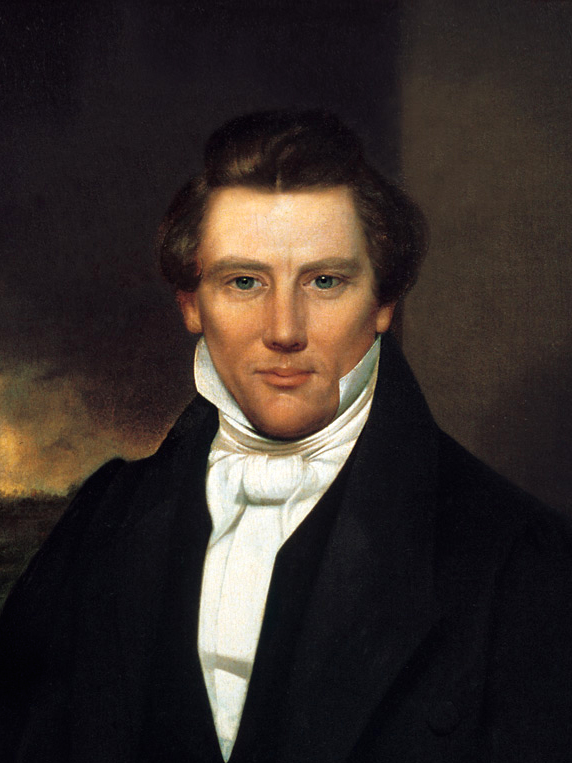
The Latter-day Saint connection with Freemasonry began before the migration west. Hyrum Smith and Heber C. Kimball had belonged to lodges in the 1820s. In Nauvoo, Illinois, Masonic organization became closely connected with the church’s leadership and the growth of the town.
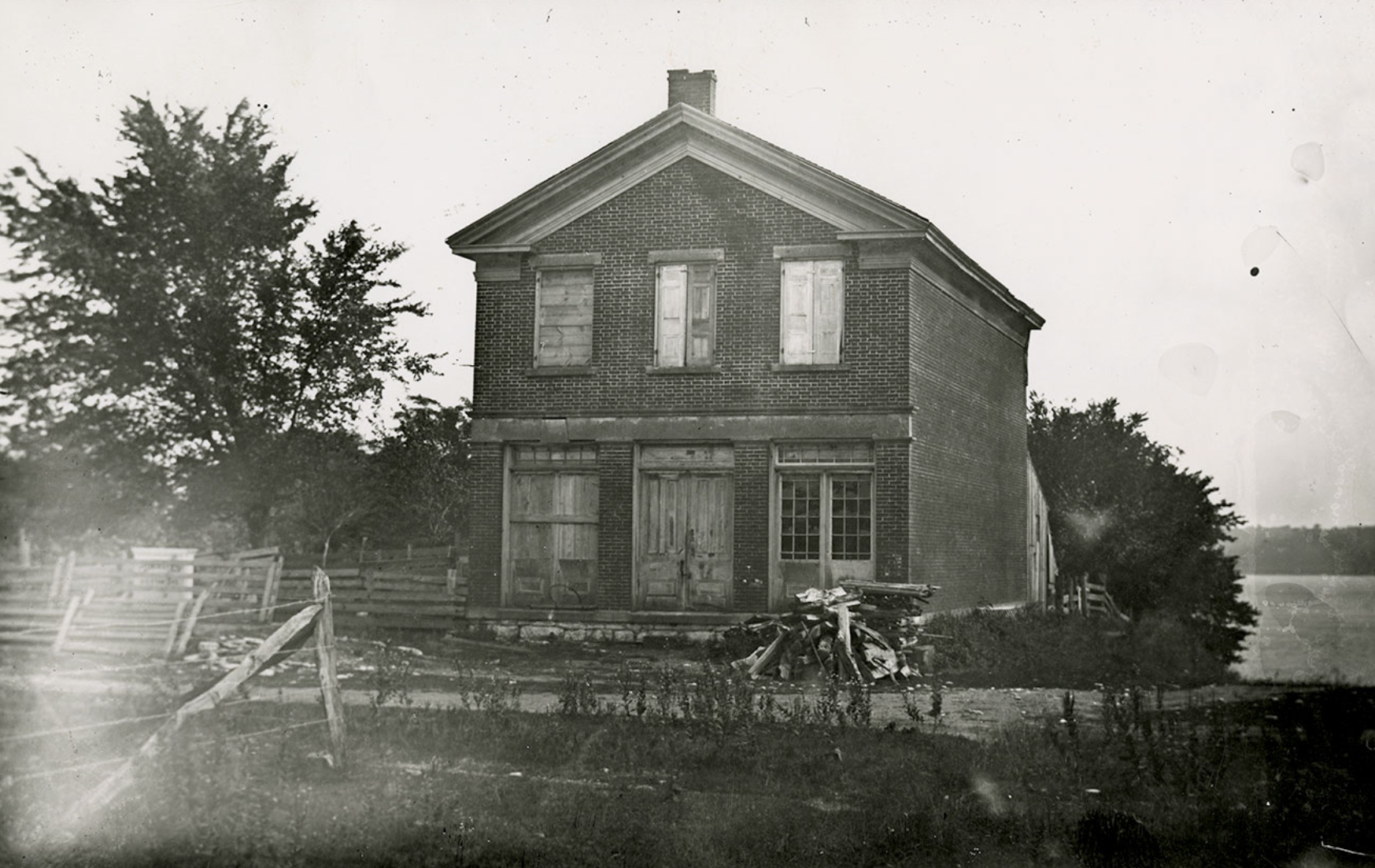
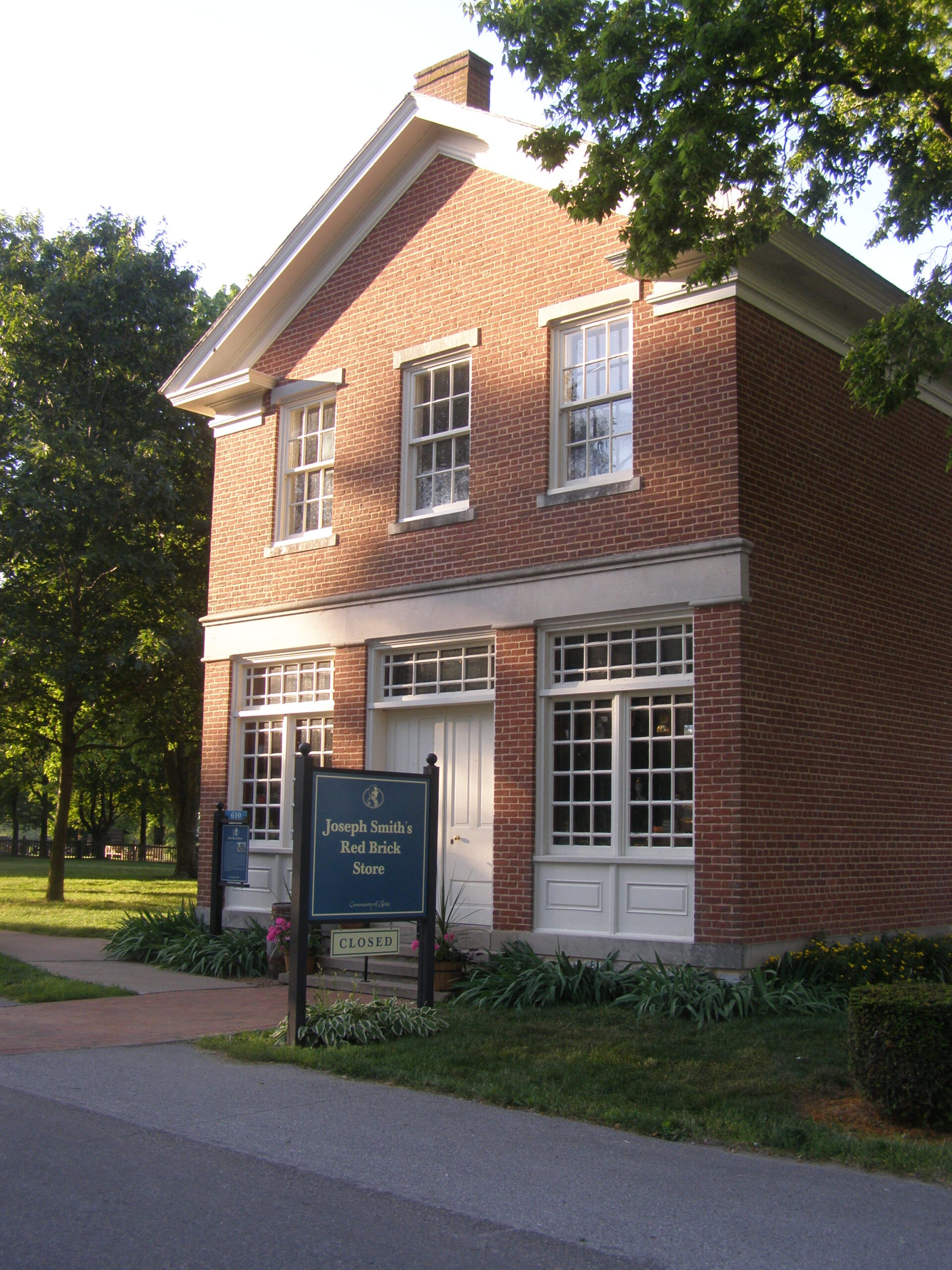
On 15 March 1842, Illinois Grand Master Abraham Jonas initiated Joseph Smith and Sidney Rigdon as Entered Apprentices in the room above Smith’s Red Brick Store. The next day, they received the Fellowcraft and Master Mason degrees. Their progression was unusually rapid, carried out under the Grand Master’s authority.
Lodge membership expanded quickly. Illinois Masons became concerned about the rate of admissions and the growing influence of the Nauvoo community. The relationship deteriorated through suspensions and the withdrawal of authority. Following the deaths of Joseph and Hyrum Smith in June 1844, the sense of injury deepened. Nauvoo Masons continued working independently until the Latter-day Saints left Illinois in 1846. They did not establish a comparable lodge system after reaching Utah. 4
The endowment and Masonic ceremony
On 4 May 1842, less than two months after his initiation, Joseph Smith introduced the temple endowment to a small group in the same upper room. All nine recipients were Masons. Those who experienced both ceremonies recognized similarities in the use of dramatic instruction, symbolic clothing, gestures, and other forms.
Latter-day Saints understood the endowment as revealed religious teaching. Masonic ceremonies served a fraternal and moral purpose. The resemblance in forms therefore became a subject on which people could agree about particular details and disagree about their meaning.
Michael W. Homer’s extended study examines the relationship through contemporary statements and later interpretations. The Scottish Rite Masonic Museum and Library recommends his work as a starting point because it addresses the connection without assuming that historical influence, by itself, resolves a question of religious belief. For readers in Utah, the distinction is useful: a church ordinance and a lodge degree can be historically related while serving different communities and purposes. 4, 5, 11
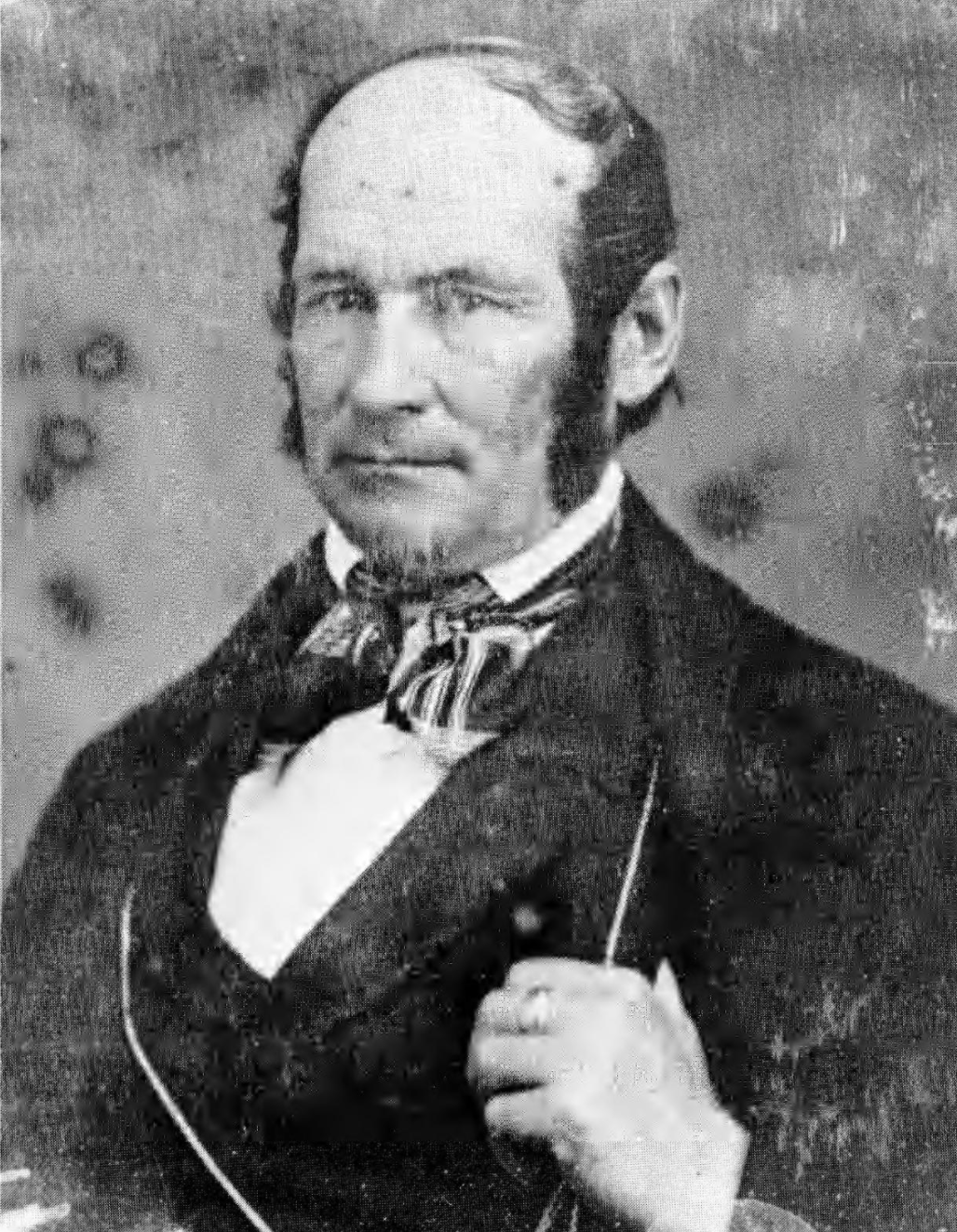
The distinction between a lodge and a church is especially important in this story. A person could belong to both, yet each institution conferred its own offices and obligations. Joseph Smith’s Masonic initiation did not make the church a Masonic obedience, and the later endowment did not confer membership in a lodge. Shared ceremonial forms must be considered alongside the different purposes and authority claimed by each institution.
A shared past followed by exclusion
The early connections did not prevent hostility between Utah Masons and Latter-day Saints. Disputes over Nauvoo’s lodge practices carried west. Polygamy, political authority, and competing explanations of ritual added further sources of distrust. Church leaders discouraged involvement in secret societies, while Utah Masons increasingly treated church membership as an obstacle to admission.
In 1925, the Grand Lodge of Utah adopted a formal prohibition against Latter-day Saints. It extended to church members who had already become Masons under other recognized jurisdictions. A person’s membership in a lodge elsewhere could therefore fail to secure acceptance in Utah.
Attempts to reverse the policy failed in 1927, 1965, and 1983. The prohibition was finally repealed in 1984. The sequence matters because the change followed decades of internal argument. It did not occur automatically as memories of Nauvoo faded or as polygamy ceased to be a current practice of the church.
The ban belonged to a particular jurisdiction. Its history shows how local religious and political conflict could shape an institution whose language emphasized universal brotherhood. The repeal removed a formal barrier, leaving individual members and communities to establish more respectful relationships. 3, 5, 12
Christopher Diehl and a library open to the public
One of Utah Masonry’s most lasting contributions began with books. The early collection contained works on the fraternity, but Grand Master Charles W. Bennett proposed adding general literature in 1875. The aim was to serve readers beyond the membership. A larger room became available after the Salt Lake lodges moved in 1876, and books from the former Ladies’ Library Association helped turn the proposal into a public collection.
The contemporary Utah Gazetteer dates the public opening to 1 September 1877, when the shelves held 1,786 volumes. In its first year, the library lent 6,387 books for home reading. Christopher Diehl, Grand Secretary and librarian, oversaw an enterprise that depended on gifts, subscriptions, cataloguing, and regular opening hours. The collection had to meet the needs of people looking for general reading as well as those studying Masonry.19
The project also had financial limits. A library open to a city required more sustained support than the lodges could indefinitely provide. Its books passed into the Pioneer Library Association and became part of the collection from which Salt Lake City’s municipal library developed. The transition placed responsibility for public reading on a broader footing, with public funding and professional library staff.
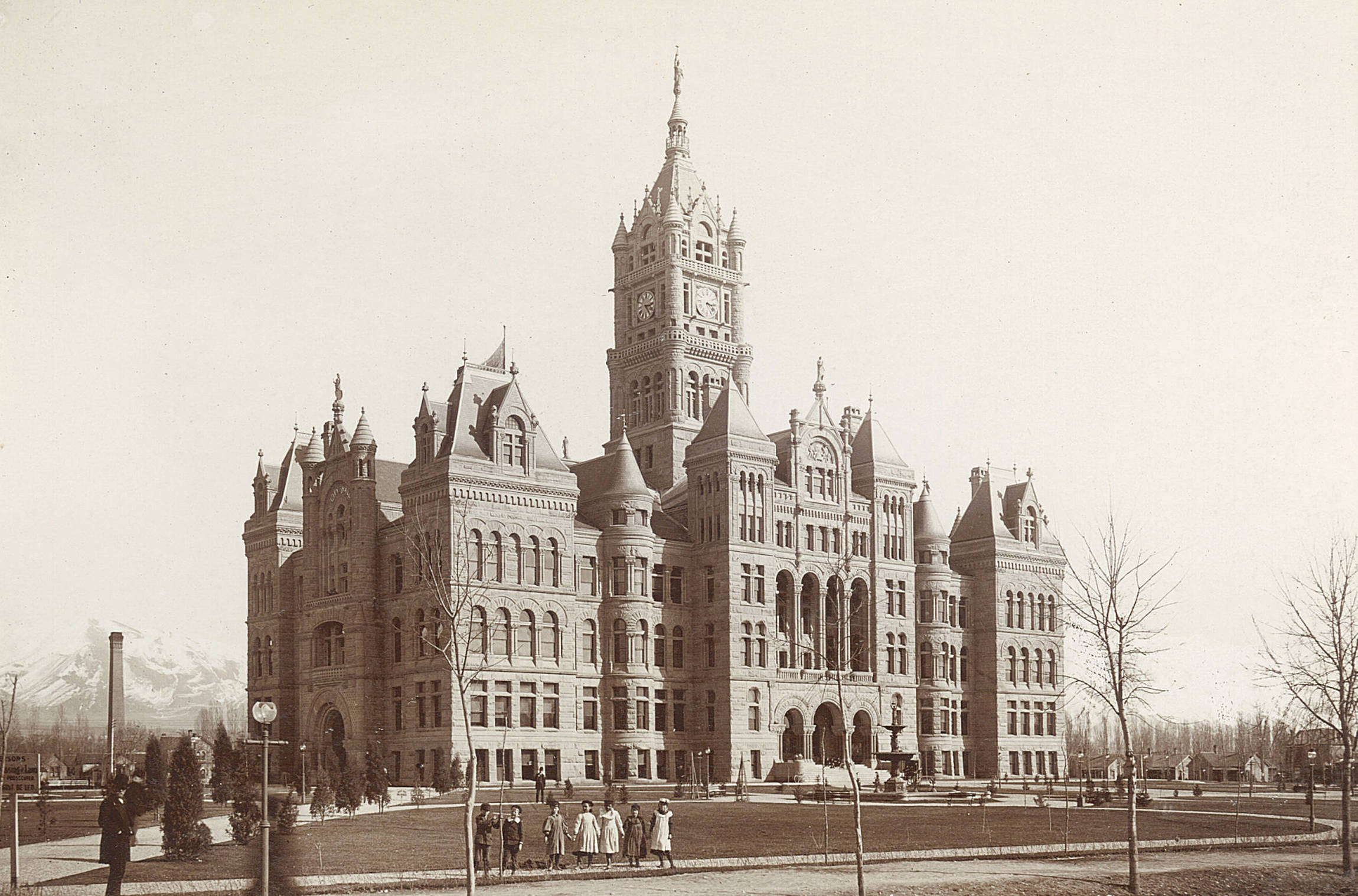
The city library opened on 14 February 1898 in the City and County Building. Joanna Sprague began there as assistant librarian; the system later named a branch for her. That history connects the lodge collection to the work of women who organized, maintained, and extended public access to books. It also qualifies any account that gives one fraternity sole credit for the city’s library: the Ladies’ Library Association, the Pioneer Library Association, legislators, city officials, librarians, and readers all contributed to its development.20
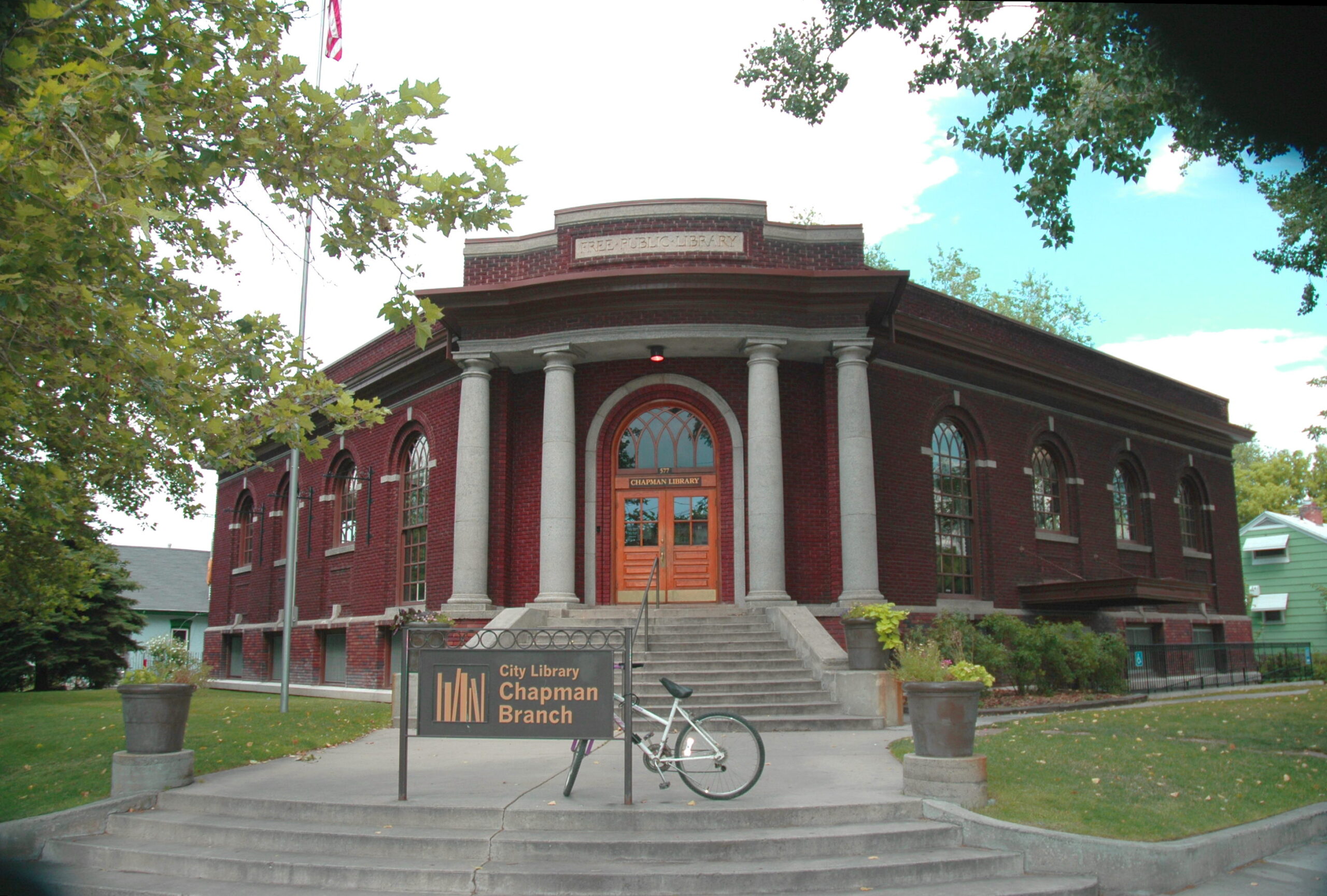
The library offers a different view of Masonic public life from the familiar photograph of a cornerstone ceremony. The work continued after the ceremony would have ended. Someone had to acquire a useful book, enter it in a catalogue, lend it, recover it, and preserve it for the next reader. That ordinary administration gave the ideal of education a practical form in Salt Lake City.
El Kalah and a century of children’s care
The Shrine developed alongside Utah’s lodges, with its own organization, social activities, and charitable work. El Kalah belonged to the growth of that wider Masonic world in the early 1890s. The Shrine was not another name for the Grand Lodge, nor was a Shrine temple a lodge conferring the first three degrees.
The Salt Lake children’s hospital began on 22 January 1925 with twenty leased beds at St. Mark’s Hospital. It supplied orthopedic care to a region where families otherwise faced long journeys for specialist treatment. In 1946, an act of Congress made land from the Fort Douglas reservation available for a permanent hospital; President Harry S. Truman signed the measure. A forty-bed hospital opened there in 1951, with wards, operating facilities, therapy rooms, a schoolroom, and accommodation for nurses.
The institution continued to change. A new hospital opened in 1995, along with a motion analysis center. In 2021, Salt Lake City’s location became an outpatient facility. Its 2025 centennial therefore marked a continuing medical service whose buildings and methods had changed substantially since the original ward. The hospital’s own chronology records outreach serving children from Ciudad Juárez as well as developments in scoliosis treatment and rehabilitation.21
Women in the wider fraternal community
Utah’s Masonic social world included the Order of the Eastern Star, Daughters of the Nile, Ladies of the Oriental Shrine, White Shrine of Jerusalem, and other associated organizations. They had their own officers, meetings, charitable projects, and institutional histories. Women’s participation in these bodies was substantial, even while the Craft lodges restricted membership to men.14
These associations should be distinguished from women’s and mixed Craft Masonry. Membership in an Eastern Star chapter did not itself confer the degrees of Entered Apprentice, Fellow Craft, and Master Mason. In a mixed lodge, women receive those degrees and serve as lodge officers on the same terms as men. The difference concerns initiation and governance, not simply whether women attended events or supported charitable work.
A new temple on South Temple
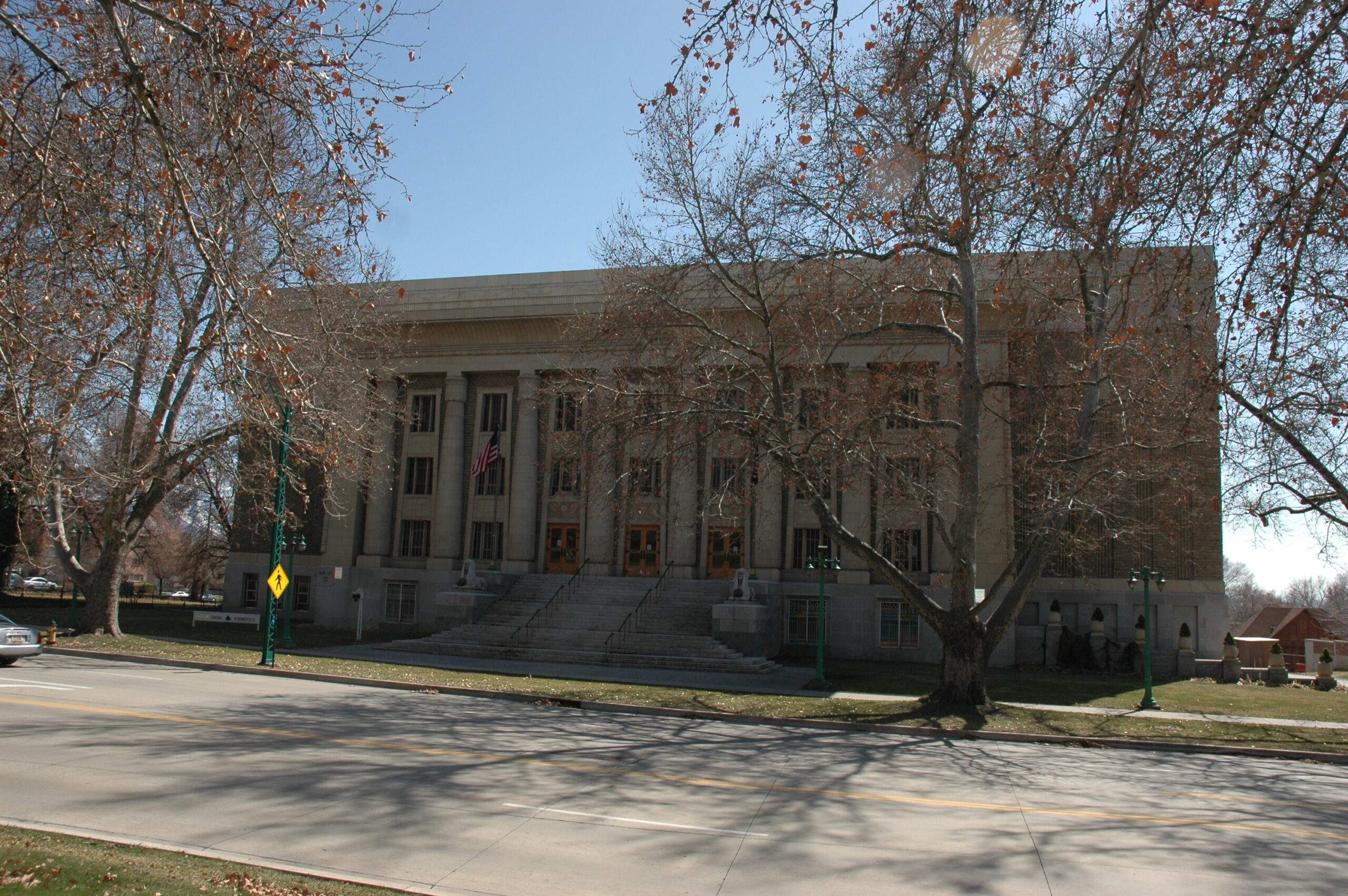
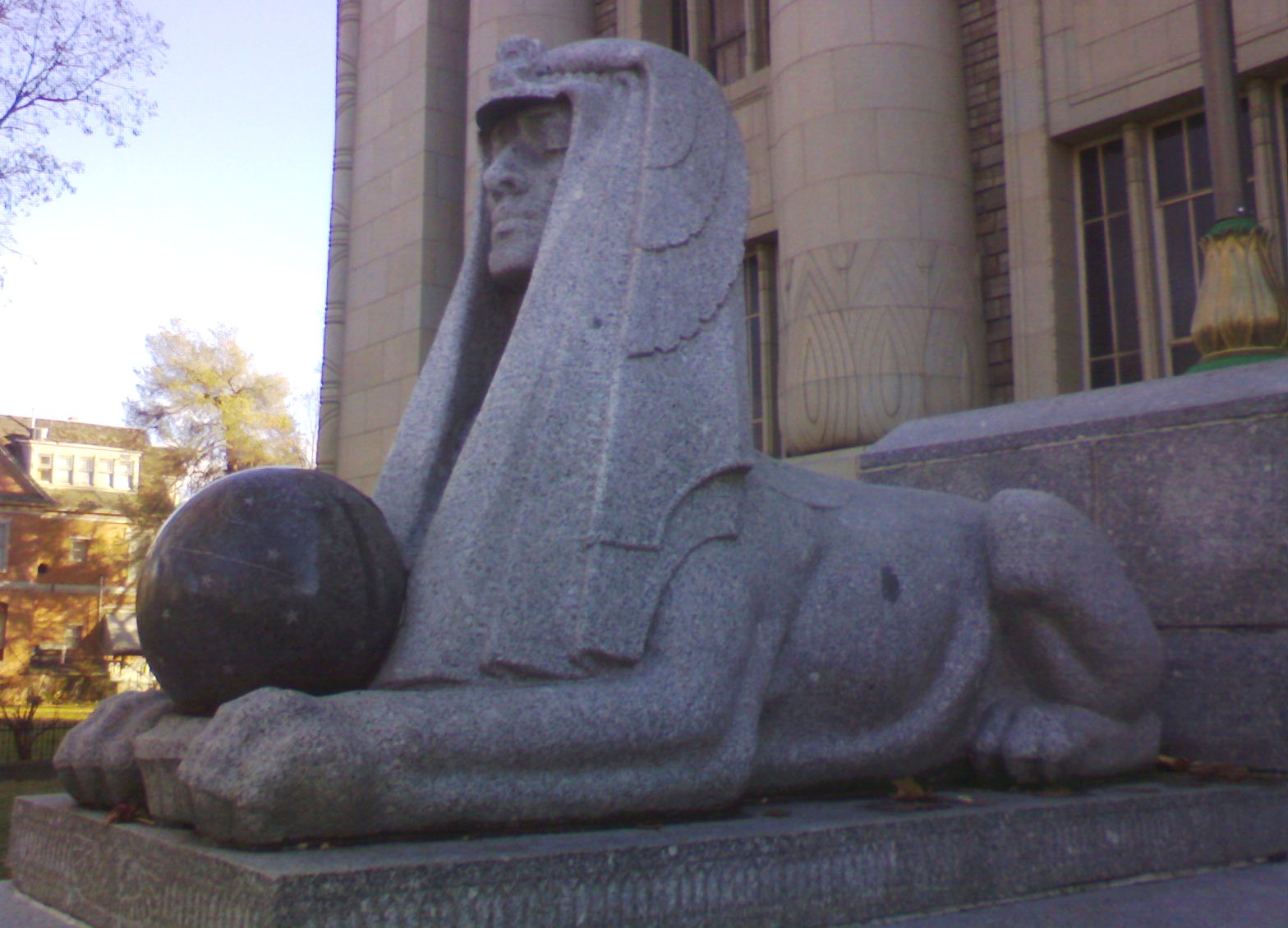
The Salt Lake Masonic Temple at 650 East South Temple gives the fraternity a prominent place in the city’s architecture. Its Egyptian Revival exterior, broad entrance steps, and sculpted sphinxes make it immediately recognizable. The building opened a new chapter for a membership that had outgrown its earlier quarters at Second East and First South.
Planning began in 1920. The architect and building committee visited Masonic buildings in other cities, looking for features to adopt or avoid. By 1925, plans were complete, the site had been purchased, and arrangements for the furnishings were in place. The cornerstone was laid on 5 November 1926. Construction was completed in July 1927, and the dedication followed that November.
The distinction between the cornerstone date and the dedication explains the building’s two principal anniversaries. The ceremony held in November 2026 marked one hundred years since the stone was laid; the completed temple belongs to 1927. The building has remained in use since its dedication. 6, 13
Egyptian, Colonial, Moorish, and Gothic rooms
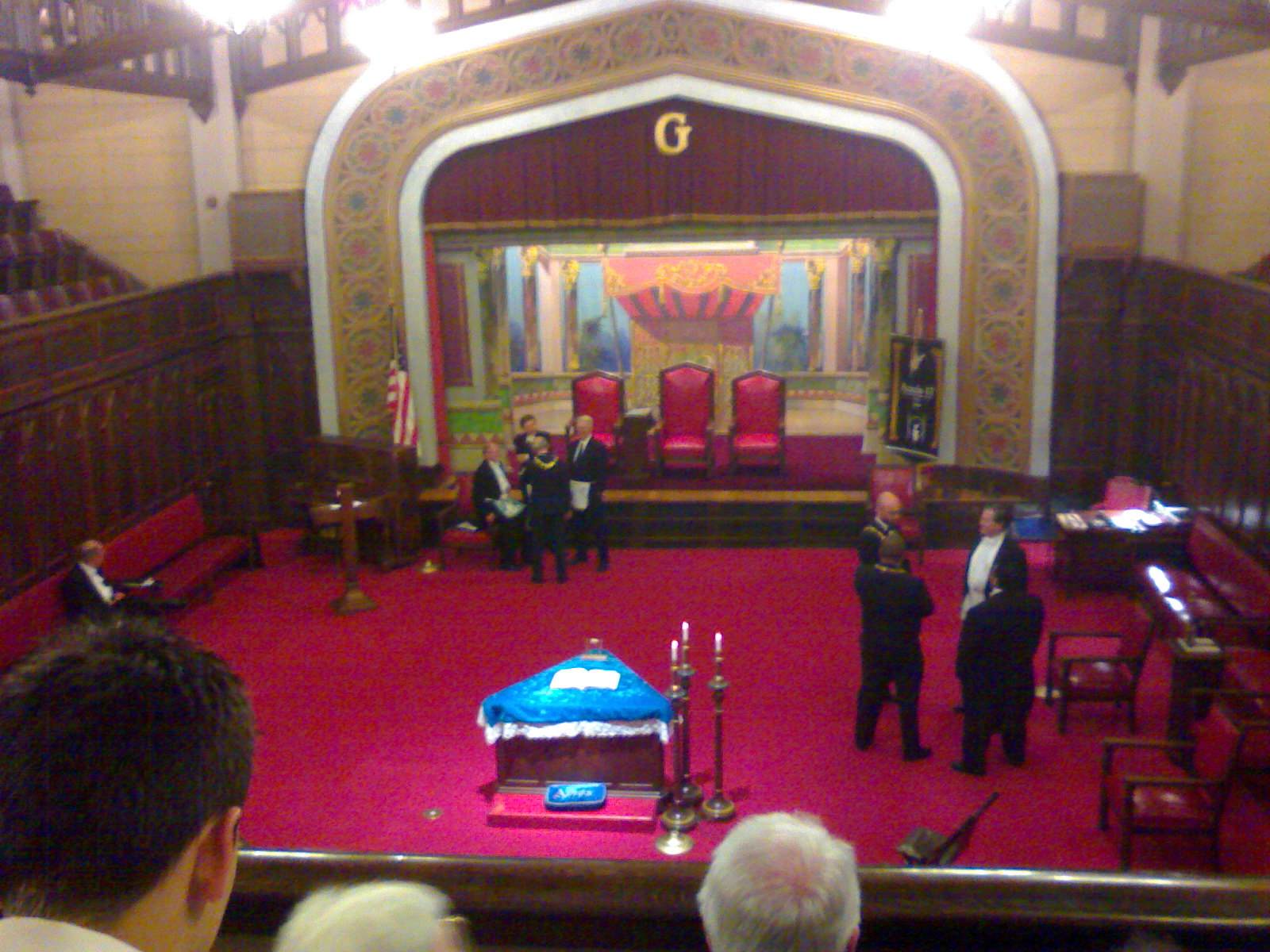
The interior offers a succession of settings rather than one decorative scheme. The Colonial Room evokes a porch and lawn. The Egyptian Room extends the exterior’s revival style into a ceremonial chamber. Upstairs, the Moorish Room provides a smaller, more intimate setting, while the Gothic Room uses pointed arches and a large bank of seating.
The Temple Association’s own tour explains that these choices reflected the building committee’s architectural interests. Egyptian and Islamic decorative references were admired as styles. They did not make the rooms temples of ancient Egyptian religion or places of Islamic worship.
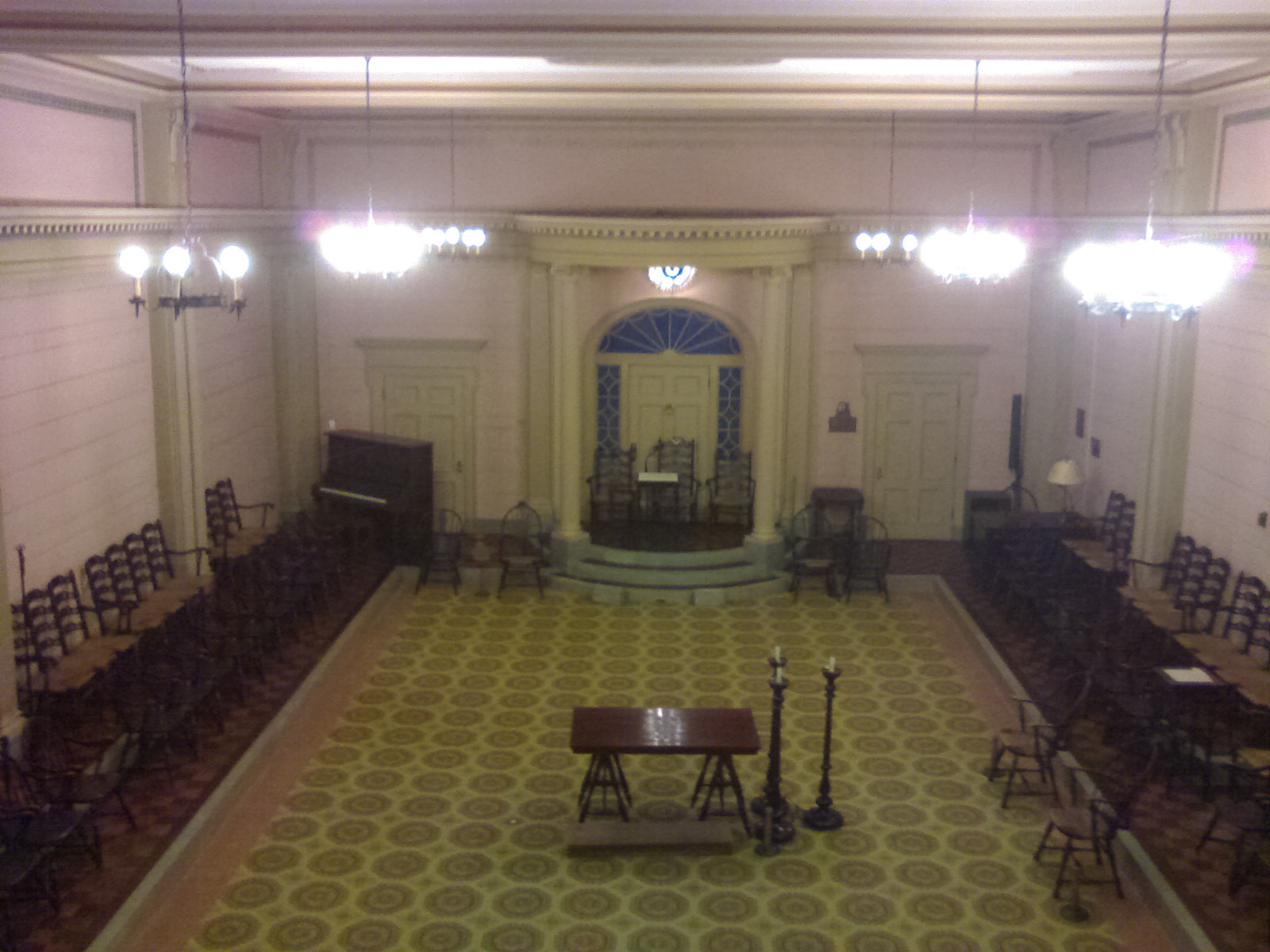
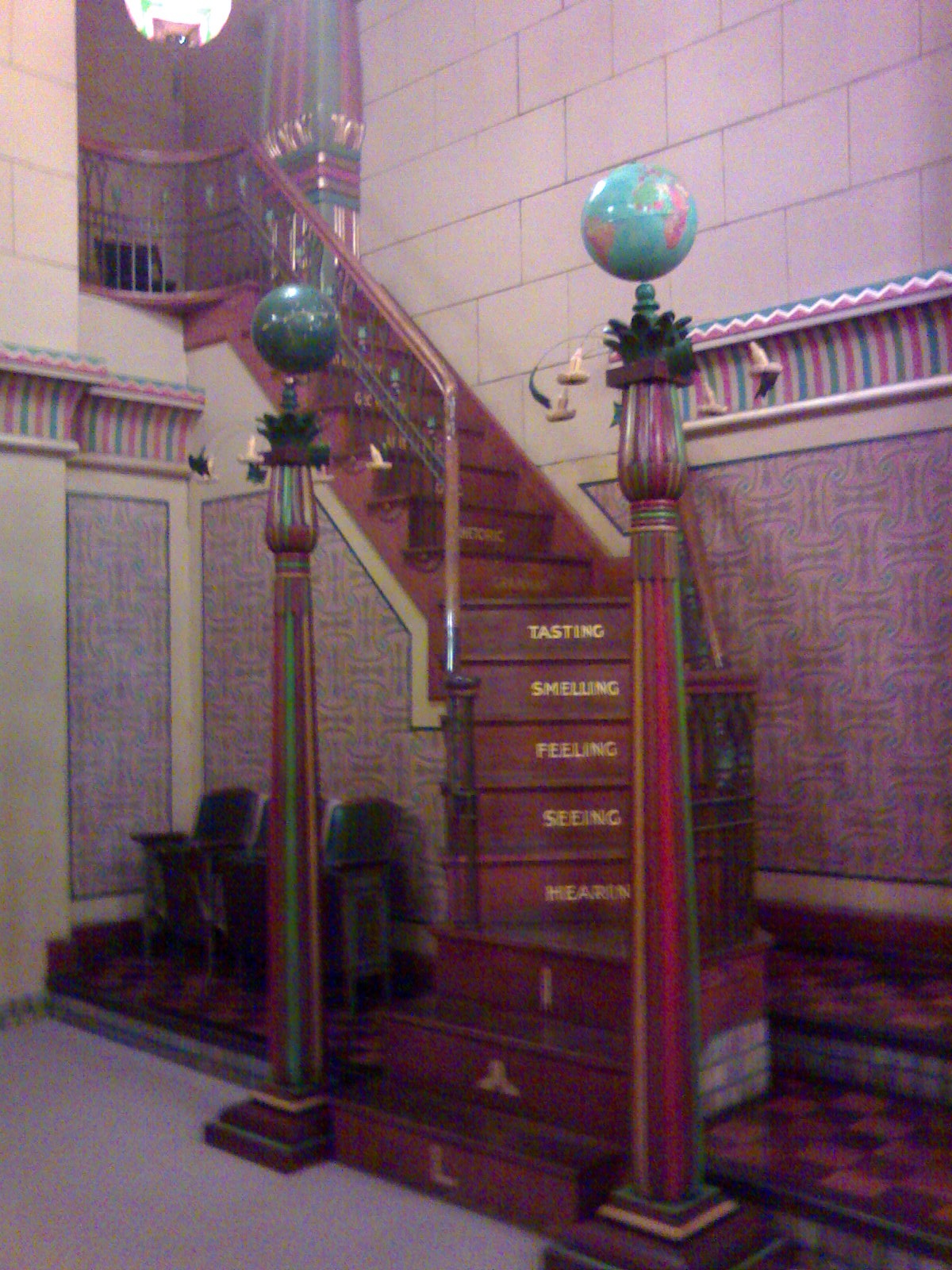
The photographs show how carefully the rooms were arranged for their users. Chairs and benches face inward toward the working space. An altar occupies the centre of a lodge room; officers’ stations and a raised dais organize the perimeter. Columns, patterned floors, painted surfaces, and changes in lighting help distinguish one room from another. The building accommodates ceremony through both its furnishings and its plan.
Preservation Utah identifies additional Venetian and Tudor influences. Visitors encounter the building at several scales: the monumental facade from the street, the auditorium and ceremonial rooms inside, and the smaller details of staircases, doors, lamps, and decorative plasterwork. 7, 13
Cornerstones, public life, and the 2026 centennial
Some Masonic ceremonies have long taken place in public. Cornerstone laying is the most visible example. The fraternity’s building tools become instruments in a civic ceremony: the square tests a right angle, the level a horizontal surface, and the plumb a vertical line. Their practical uses supply the moral language associated with the occasion.
The 1892 cornerstone ceremony for the Salt Lake City and County Building was held under Masonic auspices, according to the historical records cited in The Salt Lake Tribune. Such ceremonies connected lodge members with the construction of public buildings and the civic life of the territory.
On 21 November 2026, Grand Lodge officers again gathered publicly at the Masonic Temple to rededicate its cornerstone. The ceremony used the square, level, and plumb and commemorated the work begun a century earlier. The Tribune’s report also described a building increasingly used by visitors and outside organizations, with tours, markets, concerts, and other events bringing people through its doors. 6
Preserving a building that is still used
The temple’s preservation work concerns more than its ceremonial rooms. Its entrance, stairs, auditorium, banquet spaces, and rooftop terrace all form part of the building’s history and continuing use. The restoration organization has identified improvements in these areas among its priorities.
A functioning historic building needs heating, maintenance, repairs, and uses that help support those costs. Public tours offer another form of support: they give people a chance to understand a place they may have passed for years without entering. The photographs in this article record the building at earlier dates, while the current tour programme allows visitors to encounter the rooms as they are used today. 7, 8
Mixed Freemasonry in Salt Lake City
DELPHI-USA belongs to the international mixed and liberal Masonic tradition. Women and men share its lodge work on equal terms. Freedom of conscience protects members’ religious and philosophical convictions, and the Order’s Founding Declaration retains the traditional invocation of the Grand Architect of the Universe.
This places DELPHI within Utah’s broader Masonic landscape as a separate institution with its own membership practices and affiliations. The historic temple photographs illustrate the city’s architectural heritage; they do not depict DELPHI’s lodge rooms.
For a mixed lodge working in a state shaped by migration and religious difference, this history is close to home. It records the effort required to establish an association, the damage caused by exclusion, and the possibility of revising inherited rules. The people who built Utah’s early lodges left both useful institutions and difficult questions for their successors.
Readers interested in DELPHI’s work in Salt Lake City can contact the Secretariat.
Chronology
| Date | Event |
|---|---|
| 1842 | Joseph Smith is initiated at Nauvoo on 15 March and receives the next two degrees the following day. |
| 1858 | The army establishes Camp Floyd in Cedar Valley. |
| 1859–1860 | The army lodge receives its Missouri dispensation on 6 March 1859 and charter as Rocky Mountain No. 205 on 1 June 1860. |
| 1861 | The post closes during the Civil War; the lodge surrenders its charter. |
| 1866–1871 | The Salt Lake lodges obtain authority from grand lodges outside Utah. |
| 1872 | The Grand Lodge convention opens on 16 January; Story Lodge develops in Provo and receives its charter in October. |
| 1873–1874 | Corinne and Weber lodges receive their charters. |
| 1877 | The Masonic Public Library opens to readers on 1 September. |
| 1880–1882 | Uintah Lodge at Park City and St. John’s Lodge at Frisco receive charters. |
| 1892 | Masons conduct the City and County Building cornerstone ceremony. |
| 1898 | The municipal library opens in the City and County Building on 14 February. |
| 1906 | Ogden’s Washington Boulevard Masonic temple is publicly dedicated. |
| 1912 | Unity Lodge No. 18 receives its charter in Ogden. |
| 1916 | Harmony Lodge No. 21 receives its charter in Logan. |
| 1925 | The Salt Lake Shrine hospital begins with leased beds; the Grand Lodge formalizes its exclusion of Latter-day Saints. |
| 1926–1927 | The South Temple cornerstone is laid on 5 November 1926; the new temple opens in 1927. |
| 1950–1951 | Harmony dedicates its Logan temple in 1950; the permanent Shrine hospital opens in 1951. |
| 1966–1967 | Ogden builds and dedicates the temple at 20th Street and Harrison Boulevard. |
| 1984 | The Grand Lodge repeals the exclusion of Latter-day Saints. |
| 1995–2021 | A new Shrine hospital opens in 1995; the Salt Lake location becomes an outpatient facility in 2021. |
| 2026 | The Salt Lake temple marks the centennial of its cornerstone. |
Sources and further reading
- George Washington Masonic National Memorial, “Grand Lodge of Utah” (1 September 2023), for dispensation, charter, and founding-lodge details. Its statistics describe 2023.
- Story Masonic Lodge No. 4, “History of Utah Freemasons,” for the January 1872 convention and Provo organization.
- Addison Blair, “Freemasonry in Utah,” Intermountain Histories, Brigham Young University. A public-history overview; numerical estimates are historical, not current.
- The Church of Jesus Christ of Latter-day Saints, Church History Topics, “Masonry.” Institutional history of Nauvoo and the Church’s interpretation of the endowment.
- Michael W. Homer, “‘Similarity of Priesthood in Masonry’: The Relationship between Freemasonry and Mormonism,” Dialogue 27, no. 3 (Fall 1994), pp. 1–113, especially pp. 65–78 and 112–113.
- Isabel Meléndez-Rivera, “Historic Utah temple, once veiled in mystery, celebrates its 100th anniversary and a new era of openness,” The Salt Lake Tribune (22 November 2026).
- Preservation Utah, “Salt Lake Masonic Temple Tour,” event description for 16 November 2026, for architectural styles and public interpretation.
- Salt Lake Masonic Temple Restoration Fund, restoration aims and community use.
- Audrey M. Godfrey, “Camp Floyd,” Utah History Encyclopedia (1994), Utah Historical Society’s History to Go.
- Utah Historical Society, History to Go, “An Uncommon Footstep: Dr. Frederic Horatio Simmons in Idaho and Utah.”
- Scottish Rite Masonic Museum & Library, “Freemasonry and the Early Mormons,” for Nauvoo and the historiography of Masonic influence.
- “Mormonism and Freemasonry,” Wikipedia, section on lodge membership policy, for the 1925 ban and the repeal attempts; see its citations to Michael W. Homer.
- Salt Lake Masonic Temple Association, “Virtual Tour,” for the building chronology, room descriptions, and the committee’s architectural choices.
- Attilio G. Parisi, “Freemasonry in Utah,” Utah History Encyclopedia (1994), Utah Education Network edition.
- Robert Sloan, Utah Gazetteer and Directory of Logan, Ogden, Provo, and Salt Lake Cities for 1884, pp. 220–221, “Free Masons” (digital transcription).
- Golden Spike Lodge No. 6, institutional history of Weber Lodge, its meeting places, and the 1966 temple plans.
- Unity Lodge No. 18, institutional histories compiled by Harold G. Mischler and Samuel S. Harris, with later updates.
- Harmony Lodge No. 21, “Our History,” for the Logan charter, the 1948 fire, and the 1950 temple.
- Robert Sloan, Utah Gazetteer (1884), “The Masonic Library” (digital transcription).
- Utah Division of Archives and Records Service, “Joanna Sprague: Stories of Utah Women,” 26 May 2020.
- Shriners Children’s Salt Lake City, “Our History,” for the 1925 ward, the Fort Douglas site, the 1951 and 1995 hospitals, and the 2021 outpatient transition.
DELPHI reference text, What is Freemasonry (PDF), pp. 35–42, for the Order’s principles, society, religion, and method; read alongside the Founding Declaration. Other institutions’ statements describe those institutions. Image records and licenses appear with each illustration.
Further research: Michael W. Homer, “Masonry and Mormonism in Utah, 1850–1984,” Journal of Mormon History 18, no. 2 (1992), pp. 57–96, listed in the USU journal archive; and Mormonism and Freemasonry (Wikipedia; follow its references). The 1992 article is listed as further reading; the analysis here draws on Homer’s accessible 1994 study.
Sources reviewed 25 November 2026.